Table of Contents
- Why Dedicated Infant Zones Matter in an Indoor Playground
- What to Look for in an Indoor Playground for Babies
- Indoor Playground Safety for Toddlers and Infants
- Infant Gross Motor Activities That Build Real Skills
- How Kids Wonder Approaches Its 2 and Under Area
- Practical Details for Parents and Caregivers
- Conclusion
- Frequently Asked Questions
Last Updated: October 15, 2026
Why Dedicated Infant Zones Matter in an Indoor Playground
The best indoor playgrounds with dedicated infant zones separate babies from bigger kids, and that separation is the whole point.
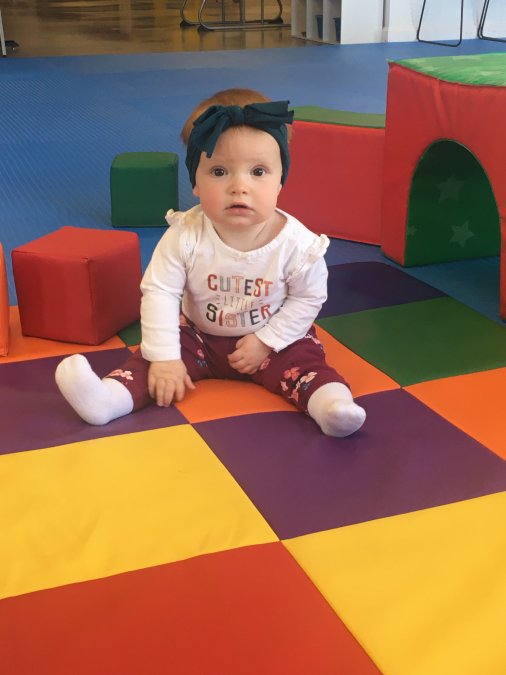
Baby crawls across padded mats in a secure infant zone as a caregiver watches from a nearby bench.
Infants and early walkers are in a completely different stage of development than preschoolers.
That’s why the crawler zone exists as its own gated space, apart from Lil’Town and the big inflatables.
The American Academy of Pediatrics guidance on safe play spaces makes the same point: supervised, age-appropriate environments let young children take the small physical risks that build motor skills.
What to Look for in an Indoor Playground for Babies
Most roundups tell you to look for a “baby area.” That phrase does a lot of hiding. A carpeted corner with a few plush blocks is not the same thing as a zone built for a child still learning to hold their own head up.
Here is what actually separates a real infant zone from a labeled one, and how to check each item before you commit to a visit.
1. A physical boundary, not a visual one
Ask whether the infant area is enclosed by a gate, a half-wall, or a raised barrier a running four-year-old would have to deliberately climb. A change in flooring color is not a boundary. At Kids Wonder, the crawler area sits apart from Lil’Town and the large inflatables, so a toddler mid-sprint in the pretend town is not on a collision course with a baby practicing pull-ups.
2. Equipment matched to the stage, not the age number
“2 and under” covers a huge range. A 6-month-old and a 22-month-old need different things. Look for a mix: soft mats for belly time and crawling, low shapes for pulling up, a floor-level mirror, manipulatives sized for grasping and mouthing, a ball pit for reaching and dumping, and a small slide for early climbing.
3. A sightline from a seated position
You should be able to sit down and still see your baby. If the only way to supervise is to stand and lean over a barrier, you’ll spend the whole visit hovering. Benches and clear sightlines are a design choice worth asking about.
4. A monitored entrance
Who controls who comes in and out? At Kids Wonder, all play areas sit inside a monitored gate, and no one enters or leaves without a staff member checking them in or saying goodbye. Adults without a playing child are not admitted. That policy makes it possible to have one child in the crawler area and another in Lil’Town without splitting yourself in half.
5. A clear answer to “infant-only or shared?”
These are two different products marketed with the same words. Infant-only means restricted to crawlers and early walkers. Shared toddler space means younger children play alongside older ones with supervision. Both are fine; confusing one for the other is not. Ask directly: “Is this zone restricted, or just recommended for babies?”
6. Hygiene you can ask about
Babies put everything in their mouths, so the question is not whether the space is clean, but how often it is cleaned and which items get wiped down. Indoor play spaces that are carefully maintained tend to stay cleaner than outdoor playgrounds, which rarely get wiped down at all. At Kids Wonder, we sanitize manipulatives—including the toys in the infant area—with food-safe hypochlorous acid. We also use a “yuck bucket” for items that have been placed in a child’s mouth or are otherwise dirty and need to be cleaned.
7. Sensory load
A dedicated infant zone should be quieter than the main floor. If the baby area shares a wall with the inflatables, a sensitive baby will spend the visit startled rather than curious. Visit once before you commit, ideally at a slower time of day, and watch how your child responds to the noise.
Indoor Playground Safety for Toddlers and Infants
The single most important safety feature in any indoor playground is separation between infant-only spaces and shared toddler areas. Padding matters, cleanliness matters, but nothing protects a wobbly 14-month-old like a physical boundary they can’t wander past.
That’s a distinction many parents don’t think to check. A venue might advertise a “baby area” that’s really just a corner of the main floor.
Separation Between Infant-Only and Shared Toddler Spaces
Infant-only means restricted to crawlers and early walkers. Shared toddler space means a monitored area where younger children can play alongside older ones with supervision.
Our play areas sit inside a monitored gate, so no one enters or leaves without a staff member checking them in or saying goodbye. Adults without a playing child can’t come in.
Infant Gross Motor Activities That Build Real Skills
Infant gross motor activities use the large muscle groups: rolling, crawling, pulling up, cruising, and eventually walking.
The equipment matters less than the repetition. A ball pit encourages reaching and grasping. A small slide invites climbing and controlled sliding.
What most parents miss is that these gains come from regular visits, not one rainy afternoon.
How Kids Wonder Approaches Its 2 and Under Area
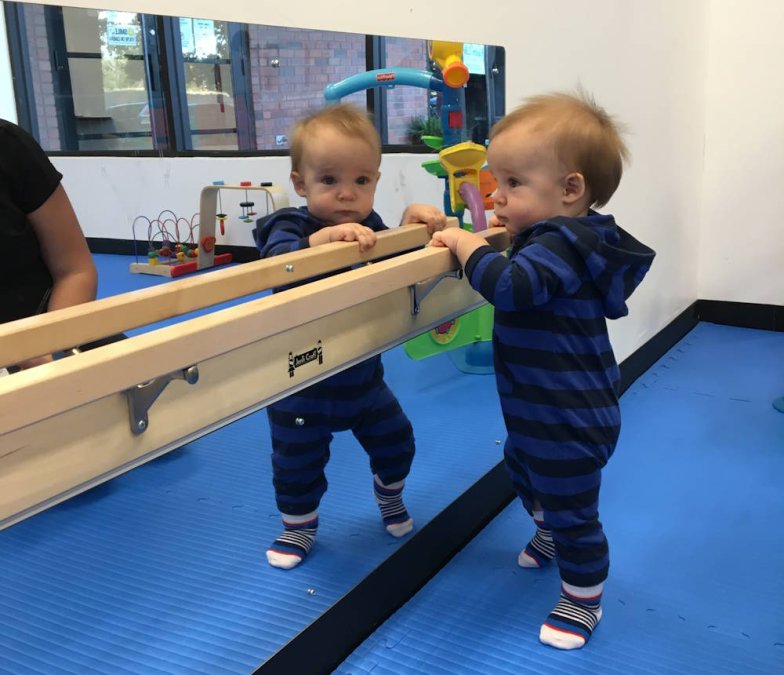
Our 2-and-under area is designed and restricted for crawlers and early walkers, with soft play mats, a baby mirror, manipulatives, a ball pit, and a tiny slide.
Young toddlers start gravitating toward Lil’Town the moment they can walk, pushing a shopping cart or baby stroller around the pretend town.
Coming to play regularly helps infants develop quicker, learn to walk, and model the behavior of older children they can see nearby.
Practical Details for Parents and Caregivers
The play equipment gets all the attention. The visit itself is decided by everything around it: where you park the stroller, where you feed a baby, where you change one, and whether you can sit down for five minutes without losing sight of your child.
Timing your visit around your baby, not the clock
A baby’s best window is usually right after a nap and a feed, before the afternoon fussy stretch. Aim for a slower part of the day so the room is quieter and the infant zone is less crowded, weekday afternoons tend to be calmer than weekends.
Feeding and quiet space
Plan to feed before you arrive or step out to the car if your baby needs a calm, dim space to nurse or take a bottle. If your baby is starting solids, note that outside food and drink are not allowed in the play center except for water, so a snack from the Snack Bar is the move.
Diapers and changes
Bring your own changing supplies and a wet bag. Ask at check-in where the changing area is before you need it, not while holding a wriggling baby. A spare outfit is not optional if your baby will be crawling on padded mats and sitting in a ball pit.
Strollers and gear
For fire safety reasons strollers are not allowed inside. Bring a carrier if you want your hands free while a second child plays, and pack light so you’re not juggling bags in the lobby. A small bag with diapers, wipes, a change of clothes, water, and a pacifier covers most visits.
Sitting down, actually
The point of a dedicated infant zone is that you get to sit at the edge and watch instead of hovering. Look for benches with a clear view of the zone. That’s the difference between a visit that restores you and one that’s just parenting in a different room.
Cleanliness and mouthing
Babies mouth everything, so cleanliness matters more here than anywhere else in the building. Indoor play spaces that are carefully maintained tend to stay cleaner than outdoor playgrounds, which rarely get wiped down. We’re known for cleanliness, and we take that seriously with our youngest visitors.
Weather and the “any day” advantage
You can visit any day regardless of the weather. In a place where a sunny afternoon can turn into a hailstorm by two o’clock, that’s the difference between a plan that holds and one that gets cancelled.
Regular visits, not rainy-day visits
One visit is fun. The developmental gains, motor skills, confidence, modeling older children, come from showing up regularly. Habit is where skills compound, which is why we built a membership for the under-one stage: the OneDER Club runs $30 per month for babies under one.
Birthdays and group visits with little ones
First birthdays and small gatherings work best when the venue handles setup and cleanup. Our party coordinators manage decorations, tables, and timing, so you show up and celebrate instead of hauling supplies. We also offer private center rentals for families who want the whole space.
Conclusion
Finding an indoor playground that genuinely separates its infant zone from the bigger-kid chaos takes more asking than most parents expect.
At Kids Wonder, our 2-and-under crawler area, monitored gate, and Lil’Town give every age a space of their own.
Frequently Asked Questions
What should an indoor playground have for infants?
A dedicated infant zone with soft padded flooring, low climbing mats, a baby mirror, manipulatives, and a small slide sized for crawlers and early walkers. Look for a physical barrier separating the area from bigger kids, clear sightlines so you can watch your baby at all times, and equipment matched to the crawling and cruising stage. At Kids Wonder, the crawler area is restricted to children 2 and under and sits away from Lil’Town and the large inflatables.
Are indoor playgrounds safe for babies who are crawling?
They can be, when the space is designed for that stage. The biggest risk for crawlers is bigger children moving fast nearby, which is why separation matters more than any single piece of equipment. Soft matted flooring, a gated entry, and staff who check arrivals and departures all reduce risk. At Kids Wonder, the crawler area keeps infants away from running traffic, and the whole play floor sits inside a monitored gate.
Why should infant play areas be separate from older children?
A crawling baby and a running 5-year-old move at completely different speeds, and collisions are the predictable result when they share space. Separation lets infants explore without being knocked over, and it lets older kids play at full energy without constant warnings. At Kids Wonder, the 2 and under area is distinct from Lil’Town and the big inflatables, so babies get room to move on their own terms.
What activities help babies develop gross motor skills?
Crawling over low mats, pulling up on sturdy surfaces, cruising along a small slide, reaching for a ball, and pushing a cart or stroller all build core strength, balance, and coordination. Repeated practice matters more than variety. Regular visits give infants the chance to repeat these movements, which is how walking emerges. A ball pit and soft climbing shapes at Kids Wonder give babies several ways to practice the same skills in one session.
Can babies learn to walk through play?
Yes. Walking comes from months of crawling, pulling up, and cruising, and play spaces give babies reasons to keep trying. Watching older children move is a strong motivator too, which is why shared spaces matter once a child is steady on their feet. At Kids Wonder, early walkers often move from the crawler area into Lil’Town, pushing a shopping cart or stroller while they build confidence on two feet.