Table of Contents
- Start With a Toddler Birthday Party Checklist
- Build a Toddler Birthday Party Schedule Around Nap Time
- Toddler Birthday Party Food Ideas That Actually Get Eaten
- Toddler Birthday Party Safety Tips for Every Venue
- Choose a Venue: At-Home vs. Indoor Play Center
- Themes, Games, and Sensory-Friendly Activities
- Weather Backup Plans and Inclusive Guest Planning
- Conclusion: Your Toddler Birthday Party Plan
- Frequently Asked Questions
Last Updated: October 7, 2026
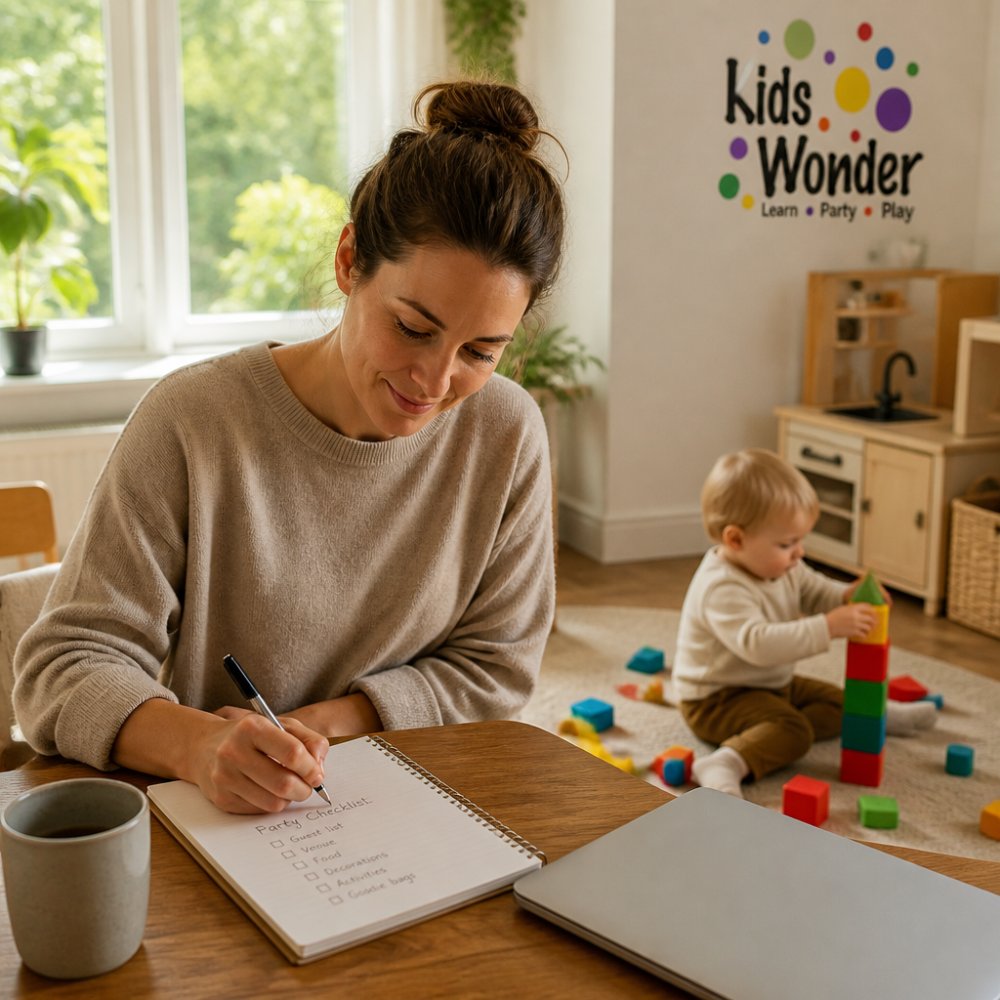
Start With a Toddler Birthday Party Checklist
Toddler birthday party planning tips work best when they start with a checklist, not a Pinterest board. A written list keeps you from chasing ideas you’ll never execute and helps you lock in the decisions that actually shape the day. At Kids Wonder, we’ve hosted enough first-through-sixth birthdays to know that the parents who stay calm are the ones who decided the big things early.
Here’s the short version of what a toddler birthday party checklist should cover:
- Date, time slot, and party duration
- Venue: at-home or an indoor play center
- Guest count, including siblings and adults
What to Lock In First
Book the date and venue before anything else. Everything downstream, from invitations to food quantities, depends on those two decisions. Once they’re set, the rest of your toddler birthday party planning is mostly filling in details.
A Toddler-Specific Planning Timeline
Most general party checklists are written for school-age kids, where the only real constraint is the calendar. Toddlers add a second constraint, the daily routine, and that changes the order of operations.
Four to six weeks out
- Choose the date and time slot by working backward from your child’s nap and meal schedule, not from what’s convenient for adults
- Book the venue, or block the at-home date on the family calendar
- Set a realistic guest count. Be sure to consider the number of adults who will attend the party. In our experience there are on average about 1.5 adults per child who attend a party. For example, one adult might come with one or more kids or one kid might come with two adults
Two to three weeks out
- Send invitations with the RSVP deadline, allergy question, and sibling policy all in the same message
- Pick the theme and buy decorations, simple and visual beats elaborate
- Plan the menu around finger foods and confirm the cake or cupcake order
One week out
- Confirm the headcount from RSVPs and adjust food and favors
- Build the party timeline (see the nap-time schedule below) and share it with anyone helping
- Check the forecast and lock in the weather backup plan if you are planning an outdoor party
One to two days out
- Shop for perishables and prep anything that can be made ahead
- Charge phones and cameras, and print the parent phone number list
- Set up decorations that won’t wilt or deflate overnight
Day of
- Set up food and activity stations at least 30 minutes before the start time
- Put the quiet corner and the youngest-kids zone in place before the first guest arrives
- Assign one person to photos and one person to the door so you’re not doing both
After the party
- Do a quick sweep for choking hazards and balloons before anyone relaxes
- Bag gifts with the card attached so thank-you notes are easy to write later
- Return or store rentals within the window the vendor set
Build a Toddler Birthday Party Schedule Around Nap Time
The single biggest mistake in toddler birthday party planning is scheduling around adult convenience instead of a child’s sleep. A toddler birthday party schedule should fit inside a wake window, not fight it. Most toddlers do best with a party that starts mid-morning or right after an afternoon nap, and most celebrations run 90 minutes to two hours. Keeping the duration short ensures that the excitement remains manageable, which provides a stable foundation when you begin planning themed parties that incorporate specific activities or decorations. At Kids Wonder we have hosted thousands of birthday parties and through trial and error have determined the perfect timeline for a toddler birthday.
Sample Two-Hour Party Timeline
|
Time |
Activity |
Why It Works |
|---|---|---|
|
0:00-0:30 |
Arrival and free play |
Lets shy kids warm up |
|
0:30-0:50 |
Food and cake |
Prevents meltdowns |
|
0:50-1:10 |
Activities |
Energy is highest here but can be hard to keep kids attention |
|
1:10-1:45 |
Open play |
Wind-down before pickup |
|
1:45-2:00 |
Favors and goodbyes |
Ends before overtired |
Skipping the nap to fit a party in rarely works. An overtired toddler will melt down during cake, and you’ll spend the last half hour managing tears instead of celebrating.
Toddler Birthday Party Food Ideas That Actually Get Eaten
Toddler birthday party food ideas should be simple, low-mess, and easy for small hands to manage. Skip anything that requires a fork, a knife, or a lot of chewing. The goal is food kids will actually eat, not a spread that photographs well. If your party is scheduled around a mealtime you may need more food items than if it is scheduled between meals.
Reliable options include:
- Pizza cut into small squares
- Soft fruit like melon and berries
- Mini sandwiches or pinwheels
Allergy-Safe Menu Planning
Ask about allergies on the invitation, not at the door. A simple RSVP line like “Please let us know about any food allergies” gives you time to plan. Keep allergen-heavy items separate, label what’s in each dish, and have a nut-free and dairy-free option on hand. For very young guests, it is best to keep the food simple and avoid whole grapes, popcorn, and hard candy, which are common choking hazards (the CDC).
Toddler Birthday Party Safety Tips for Every Venue
Toddler birthday party safety tips come down to supervision and space. Whether you host at home or at a play center, you need clear sightlines, a designated area for the youngest guests, and enough adults to watch every child.
A few specifics that matter:
- Check for sharp edges, loose cords, and small choking hazards before guests arrive
- Use non-toxic decorations and keep balloons away from kids under three
- Keep hot food and drinks out of reach
At Kids Wonder, our 13,000-square-foot space includes a spacious party area with plenty of room between tables, so guests can easily find their seats. We also stagger our party start times to keep the area from getting crowded during open play.
Choose a Venue: At-Home vs. Indoor Play Center
Choosing between an at-home party and an indoor play center is really a question about how much work you want to do. An at-home party saves on rental costs but adds setup, cleanup, and weather risk.
|
Factor |
At-Home Party |
Indoor Play Center |
|---|---|---|
|
Setup and cleanup |
You handle it |
Handled for you |
|
Space for running |
Limited |
Built for it |
|
Weather risk |
High |
None |
|
Equipment |
You rent or borrow |
Included |
|
Cost |
Lower upfront |
Higher, but all-inclusive |
|
Number of Kids |
Limited |
Up to 30 or more |
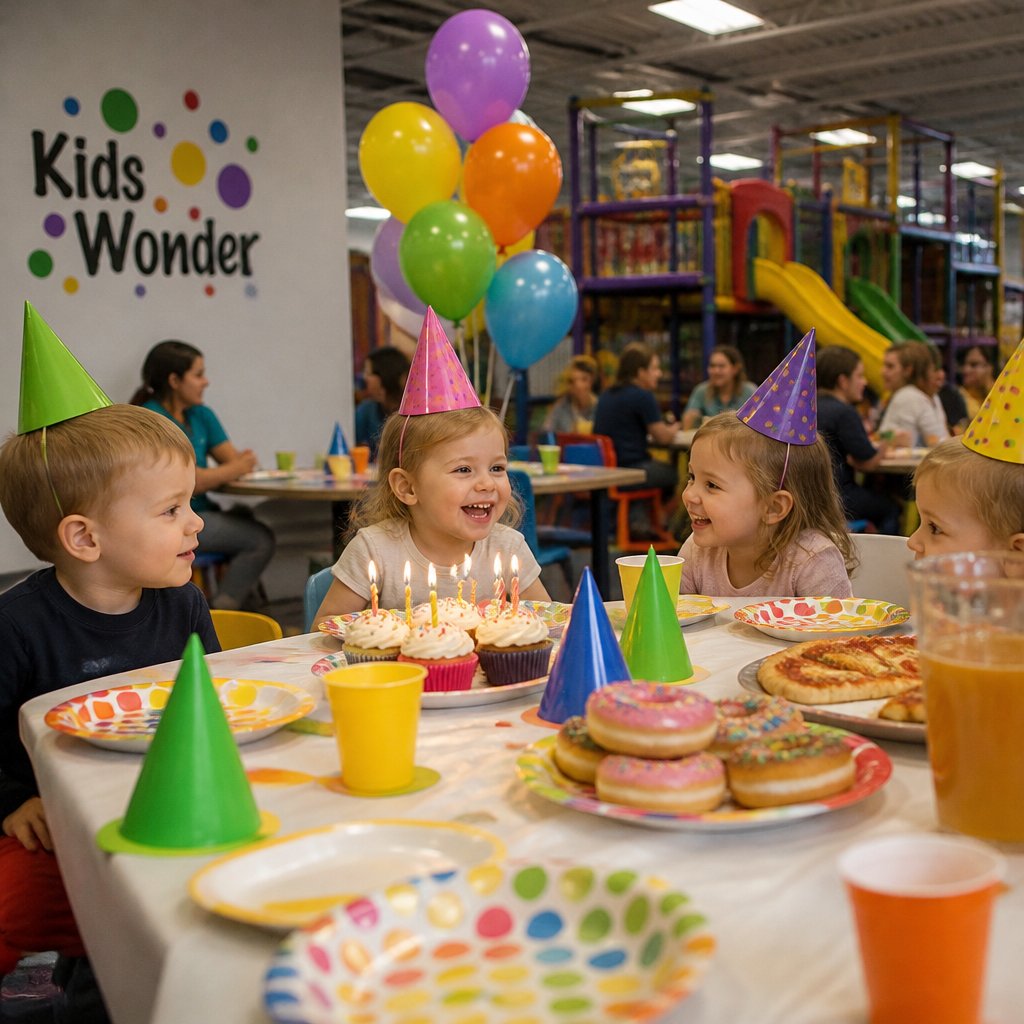
At Kids Wonder, we handle the setup and cleanup, and we provide cupcakes or donuts, juice, and pizza so you’re not coordinating a dozen vendors.
Themes, Games, and Sensory-Friendly Activities
The best themes for toddlers are simple and visual: colors, animals, trucks, or a favorite character. Decorations should be non-toxic and low-hanging risk. Keep balloons, streamers, and anything with small parts out of reach.
Why Toddler Games Fail (and What to Do Instead)
Most party games are built for kids who can wait in line, follow multi-step rules, and handle losing. Toddlers can do none of those things reliably. The developmental reason is simple: the part of the brain that manages impulse control and turn-taking is still under construction well past age three. That’s why a game that works beautifully for a six-year-old turns into a meltdown at a two-year-old’s party.
The fix is to design activities around parallel play instead of competition. Every child gets a turn at the same time, nobody waits, and nobody loses. Good options include:
- A treasure hunt with large, soft objects hidden at toddler eye level
- Spin art or a sensory bin filled with rice, beans, or water beads (supervise closely, water beads are a choking hazard for kids who still mouth objects)
- Bubbles and a parachute, which work for mixed ages because there’s no wrong way to play
Designing for Sensory-Sensitive Guests
Noise is the most common reason a toddler melts down at a party, and it’s also the easiest thing to control. A few concrete steps make a party workable for kids with sensory sensitivities, disabilities, or different communication needs, and they tend to make the party calmer for everyone else too.
- Set up a quiet corner with soft seating, a blanket, and a few books, positioned away from the main activity area but still in your sightline
- Cap the volume. Skip amplified music, air horns, and anything that pops. If you’re planning a piñata, tell parents in advance so they can prepare their child or opt out
- Post a visual schedule of the party order, arrival, play, food, cake, goodbyes, so kids who need predictability can see what’s coming
- Carefully select the time. If the guest of honor is sensory-sensitive and you are hosting at an indoor play center, planning the party for a weekday or selecting a private party time can make for a better experience.
Theme Ideas That Hold Up
A theme only needs to do three things: give you a color palette, give you a decoration shortcut, and give kids something to recognize. Simple themes that work well for this age group include colors, animals, construction trucks, ocean life, and a favorite picture-book character. Skip anything that requires detailed assembly or licensed merchandise across every category, the cost adds up fast and toddlers won’t notice the difference.
The best toddler party activity is one where every child can participate at the same time, at their own level, with no waiting and no losing.
Weather Backup Plans and Inclusive Guest Planning
Weather contingencies are non-negotiable for an outdoor party. Have an indoor backup space ready, or book a climate-controlled venue so the forecast never becomes a problem. Kids Wonder is open 363 days a year, so a rainy Saturday doesn’t cancel anything.
Inclusive guest planning means thinking about siblings, family members, and kids with different needs before the invitations go out. A few practical steps:
- State clearly on the invitation whether siblings are welcome
- Note the dress code and parking information
- Mention if the party is drop-off or parent-stay
If you’re unsure whether to invite siblings, default to yes and plan food and favors for a few extra kids. It’s far easier to have leftovers than to turn a family away at the door.
Conclusion: Your Toddler Birthday Party Plan
Toddler birthday party planning doesn’t have to be exhausting. Lock in your date and venue first, build the schedule around nap time, keep the food simple, and plan for safety and inclusion from the start.
If you’d rather hand off the setup, the food, and the cleanup, Kids Wonder can do all of it. Our party packages include pizza, juice, and cupcakes or donuts, plus add-on options and special themes, and you can choose a budget-friendly party during open play or reserve the entire center for a private celebration.
Frequently Asked Questions
How many hours is enough for a 2-year-old’s birthday party?
Two hours is the sweet spot for toddlers. Most 2-year-olds can handle about 90 minutes to 2 hours of activity before melting down. Plan for 30 minutes of arrivals and free play, 30 minutes of food and cake, 30 minutes of games or activities, and 15 to 30 minutes of goodbyes. Shorter parties respect nap schedules and keep everyone happier.
What time of day is best for a toddler birthday party?
Late morning works best for most toddlers. A 10 a.m. to noon window catches kids after breakfast and before afternoon naps. If your child naps later, try 3 to 5 p.m. Avoid scheduling during typical nap times (usually 1:00 to 2:30 p.m.) or right before meals. Check with a few parents about their child’s routine before locking in a time slot.
What should I include on my toddler birthday party checklist?
Your checklist should cover: venue or home setup, guest list and invitations with RSVP deadline, theme and decorations, food and allergy considerations, cake or cupcakes, activities and games, party favors, safety items like outlet covers and sharp edge guards, a weather backup plan, and a cleanup plan. Start planning four to six weeks ahead so nothing gets rushed.
How can I make a toddler birthday party less stressful for parents?
Plan for the number of guests (usually about 10 children max for a party at home), limit the party to two hours, and accept help when offered. Choose a venue that can accomodate a large party and handles setup and cleanup so you can focus on your child. Send clear invitations that state drop-off or stay policies, parking information, and any food allergy notes. Prepare as much as possible the night before so party day stays calm.
What food should I serve at a toddler birthday party?
Serve simple finger foods that toddlers can eat independently: small sandwich quarters, fruit slices, cheese cubes, veggie sticks, and mini muffins. Skip choking hazards like whole grapes, popcorn, and hard candy. For drinks, offer water and juice boxes. If you order pizza, cut slices small. Always ask about allergies on the RSVP and label dishes clearly.
How many activities should a toddler birthday party have?
If planning for home, plan two to three structured activities for a two-hour party. Toddlers have short attention spans, so rotate between free play, one guided game (like a treasure hunt or parachute play), and food time. Have backup options ready in case an activity flops. Unstructured play in a safe space often works better than a packed schedule.